Terminals and package exposure
A subcircuit's OUTPUT terminals are usable by the parent's wiring — you can connect them to gates, components, or even another subcircuit within the same parent. But they are NOT exposed on the parent's package (its footprint UI) unless they are wired to one of the parent's OWN Output terminals. Package pins derive only from a circuit's own Input and Output components, never directly from a subcircuit's terminals. So a subcircuit output that stays internal drives the parent's logic silently, while one routed to a parent Output becomes a visible pin on the parent's package.
Outputs feed the parent's wiring
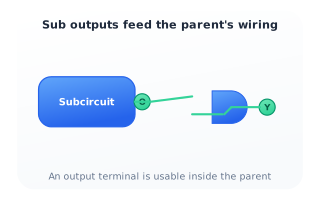
Every output terminal on a subcircuit block is a real, wireable point in the parent. Route it into a gate, an LED, or any component just as you would route a signal from a primitive. The subcircuit's internals stay hidden behind that terminal.
On the package only if wired to an Output
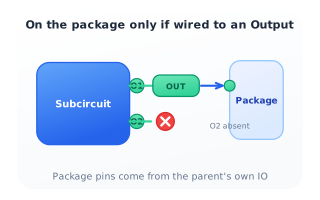
A subcircuit output shows up on the parent's package only when it reaches one of the parent's own Output components. Wire O1 to a parent Output and a matching pin appears on the package; leave O2 internal and it contributes no pin. The package is built from the parent's IO, not from subcircuit terminals.
Subcircuit to subcircuit
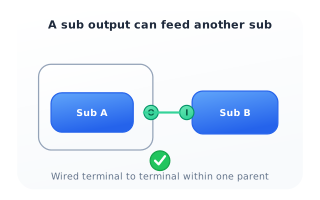
Within a single parent, one subcircuit's output can drive another subcircuit's input directly. Wire Sub A's output terminal to Sub B's input terminal to chain them, no parent Output required. This composes blocks internally while the parent's package still reflects only the parent's own Input and Output components.